






Top 7 Fastest Footballers, According to Official League Data
Not Mbappé. Not Haaland. We checked the tracking data published by the Premier League, Bundesliga and Ligue 1, and the results are not what you'd expect.

Almost every list of football's fastest players has the same problem. The numbers do not agree with each other, and almost none of them say where they came from.
One site will say Kylian Mbappé has been clocked at 38 km/h, another will say 36.7, and a third will put a player you have never heard of at the very top on 39.6.
There is a reason for that. There is no single global database that measures every league with the same equipment, so most lists end up built on reputation rather than records.
Three major leagues do publish their own tracking data, though. The Premier League, the Bundesliga and Ligue 1 all release official speed figures, and that is where every number below comes from.
Nothing here is taken from a secondary site repeating a figure without a source. That decision changes the list completely, and several famous names you would expect to see are not on it.
Two things worth knowing before the list. These figures come from different seasons and different tracking systems, so they are not perfectly comparable, and leagues that do not publish data are missing entirely.
The seven fastest on record
1. Emanuel Emegha — 37.72 km/h
The fastest run in any of the three databases belongs to a Strasbourg striker, not a winger or a full-back.

Ligue 1's own site recorded Emegha at 37.72 km/h against Auxerre, and the circumstances matter. It came during a defensive retreat of more than 60 metres, a striker sprinting back towards his own goal.
Emegha is 1.95m tall, the same height as Usain Bolt, and the run came in a 1-0 win.
The top speed is only part of it. Ligue 1's own data had him past 500 sprints across that season, far ahead of Bradley Barcola on 370, Arnaud Kalimuendo on 353 and Jonathan David on 318.
He was one of only three players in the entire league to cover at least 10 km in sprints alone, and he set a Ligue 1 record with 43 sprints in a single match against Lille.
Strasbourg played a counter-attacking style under Liam Rosenior that suited him exactly, and he scored 14 league goals that season.
2. Micky van de Ven — 37.38 km/h
The Tottenham defender holds the fastest speed ever recorded in the Premier League, set against Brentford on 31 January 2024, chasing back to cut out an attack.
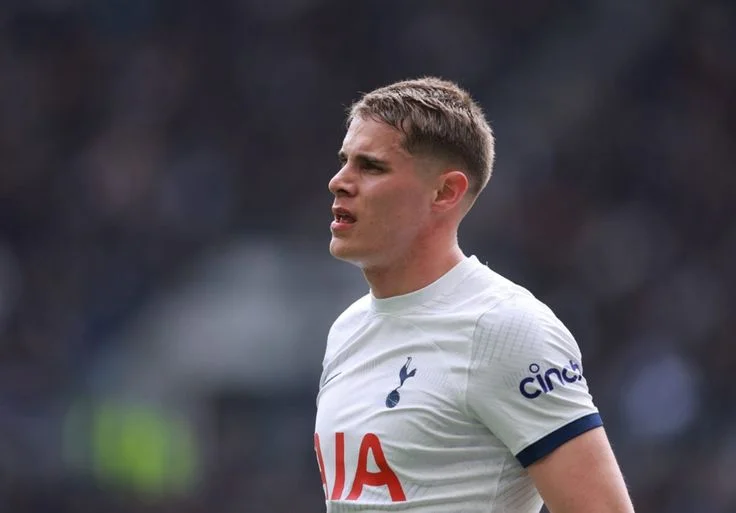
It has stood since Opta began collecting Premier League data in 2020/21, and the record came in a 3-2 win.
Here is the part that separates him from everyone else in England. Only three players have ever been clocked above 37.00 km/h in the Premier League, and Van de Ven has done it three times on his own, at 37.38, 37.23 and 37.12 km/h.
Nobody else has managed repeatable speed at that level since the data started.
That run worked out at 10.38 metres per second, against the 10.44 metres per second Usain Bolt averaged across his 100m world record in 2009.
The two are not directly comparable, since one is a peak reading and the other an average across a full race.
The speed is not a party trick either. It is what lets Tottenham defend with a high line, because one defender can cover the space behind it on his own.
3. Kyle Walker — 37.31 km/h
Walker set this for Manchester City against Everton in May 2023, at 32 years old, and it remains second on the Premier League's all-time list.
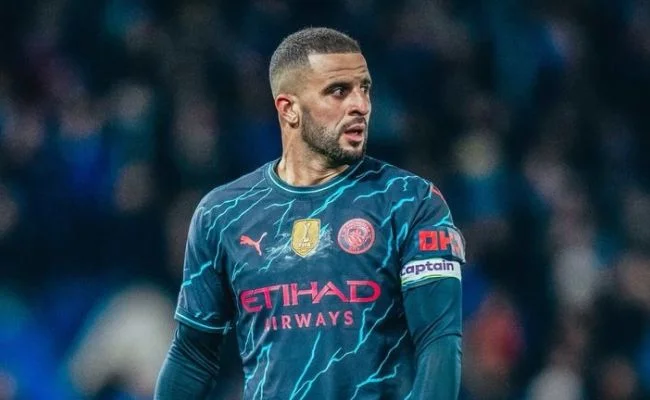
The age is the remarkable part. He was 32, and the Premier League notes he is the only player over 30 to make its top twenty at all.
It also came towards the end of the season City won the treble, at the point in a long campaign when most players are running on empty. He is now at Burnley.
4. Jackson Tchatchoua — 37.30 km/h
The Wolves wing-back was the fastest player in the Premier League across the whole of 2025/26, and third on the all-time list, recorded against Everton in the third weekend of the season.

The 24-year-old Cameroonian had only arrived from Hellas Verona that summer, so it took him a matter of weeks to go third on a list stretching back to 2020.
It was not a one-off either. He also recorded 36.97 km/h at Crystal Palace, giving him the two fastest sprints of that entire season.
Read more: Why Hull City might be more than just a Premier League survival story
5. Jean-Mattéo Bahoya — 37.16 km/h
The Eintracht Frankfurt winger set the Bundesliga's all-time speed record away at Bochum on 15 March 2025, in the 12th minute, sprinting to link up with Hugo Ekitiké on a counter-attack.
He was 19 at the time, and became the first player in Bundesliga history to pass both 23 mph and 37 km/h. The league has been recording this data since 2011/12, far longer than the Premier League's 2020/21 start.
He also scored his first ever Bundesliga goal in that same match, which Frankfurt won 3-1.
What makes the record stand out is how hard it was to hold. It was broken four separate times during that one season, with Bahoya taking it from Sirlord Conteh, who had earlier reclaimed it from Gerrit Holtmann.
6. Oliver Burke — 37.00 km/h
The Scottish forward topped the Bundesliga's official table for 2025/26 at a round 37.00 km/h, playing for Union Berlin, which also makes him the second fastest player in the league's recorded history.
He had already been fifth fastest the previous season at 36.72 km/h, then with Werder Bremen, so this was a genuine improvement rather than a single freak reading.
The more revealing number is how often he ran. Burke averaged 51 sprints per match at Bremen in 2024/25, and Union signed him off the back of that workload, adding five goals, 30 shots and 15 crosses to the running.
He is not a name that appears on the speed lists you find elsewhere, which is largely the point. Those lists are built from reputation, and the official tables are not.
7. Loïs Openda — 36.86 km/h
The Belgian striker recorded this for RB Leipzig on 3 May 2025, finishing second behind Bahoya in the Bundesliga's 2024/25 table.
Unlike most players on this list, Openda turned his pace directly into goals. He scored four of his nine league goals that season on counter-attacks, more than any other player in the Bundesliga, which is exactly the situation raw speed is worth most.
Where are Mbappé, Haaland and Davies?
This is the question the list raises, and the answer is the most useful thing in it.
Haaland actually does appear in the official data, just not near the top. The Premier League recorded his fastest run of 2025/26 at 36.2 km/h against Arsenal, which is quick for a striker of his size but more than a full km/h behind Tchatchoua.
Mbappé is harder. His widely repeated numbers, anywhere from 36.7 to 38 km/h, are reported second-hand and rarely attached to a named match and tracking system.
He plays in La Liga, which does not publish speed data the way these three leagues do, so there is no official table to check him against.
That does not mean those figures are wrong. It means they cannot be verified the same way, so they are not included here.
Alphonso Davies is the player most often called football's fastest in casual conversation. He plays in a league that publishes its data, and he does not appear in its top ten for 2025/26.
The gap between popular perception and the publicly available league data is wider than most people would expect.
People also read: Inside the Ballon d'Or: who votes, what they judge, and how it's decided
Speed is only one of the things being measured
Top speed gets the headlines, but tracking systems record several things at once, and the other numbers often say more about a player's actual job.
Distance is one. Bruno Guimarães covered 13.24 km in Newcastle's 4-3 win over Leeds in January, the furthest anyone ran in a single Premier League match all season.
In the Bundesliga, Maximilian Eggestein covered the most ground across the season at 406.9 km.
Neither man appears anywhere near a top speed list. A midfielder's workload shows up in total distance and repeated efforts, not in one peak reading.
Sprint count is different again. Bazoumana Touré led the Bundesliga with 763 sprints last season while also sitting ninth on the speed table, which makes him genuinely rare: fast, and willing to do it repeatedly.
Michael Olise is the clearest example in the other direction. Bundesliga's own data records his top speed at 32.93 km/h, several km/h slower than every player on this list.
Yet Olise led the entire Bundesliga in assists last season with 19. His value comes from what he does with the ball, not how fast he can run without it, and no speed list would ever tell you that.
Read more: How promotion and relegation actually works in football
What the data does show
One pattern is consistent across all three leagues. Speed lists are dominated by wide players and defenders rather than forwards.
The Premier League found that nine of its ten fastest speeds in 2025/26 belonged to wingers, full-backs or wing-backs. The only exception was Newcastle striker William Osula.
One likely explanation is space. A defender recovering towards his own goal, or a winger running into a channel, has room to build up speed over a long distance. A forward operating in crowded areas rarely gets the same opportunity.
Emegha at the top of this list is the exception that makes the point. His fastest run was not an attacking sprint at all. It was a 60-metre chase back towards his own goal.
People also read: How World Cup qualification actually works
Comments (0)
Be the first to comment.